AI Agent Autonomous Tool Calling and Workflow Orchestration
Background: When AI Goes Beyond Chatbots
In 2024, OpenAI’s release of GPT-4o function calling capabilities and Anthropic’s Computer Use API marked a new era for AI agents. Previously, we were accustomed to AI models handling single-turn Q&A—users ask, models answer, everything closed within the dialogue context. However, real-world tasks are far more complex: booking an international trip requires checking flights, comparing hotels, verifying visa requirements, calculating time zone differences, and generating itineraries; processing a financial report requires extracting data, invoking a computation engine, generating charts, and sending emails for approval. These tasks inherently require multi-tool collaboration, multi-step orchestration, and even cross-system invocations.
The traditional RAG (Retrieval-Augmented Generation) model shows clear limitations in such scenarios: retrieval and generation are separated, lacking dynamic decision-making capabilities. In contrast, the autonomous tool invocation capability of AI agents allows models to think like humans—“What should I do first, and then what?"—dynamically selecting tools, processing intermediate results, and autonomously recovering from errors.
This article delves into the technical principles behind building an AI agent system that supports multi-tool, multi-step autonomous orchestration and provides a complete implementation in Golang.
Technical Principles: Three Core Mechanisms of Tool Invocation
The Essence of Function Calling
Function calling is not unique to OpenAI or Anthropic, but GPT-4o has elevated it to new heights. The core idea is that while generating text, the model can output structured function call requests. These requests include function names and parameters, allowing the system to execute actual code and return results to the model for further reasoning.
From a technical perspective, this involves three key steps:
- Function Description Injection: Embed function definitions in JSON Schema format within the system prompt, telling the model, “You can invoke these tools.”
- Intent Recognition and Parameter Extraction: The model determines whether to invoke a tool based on user input and the current context, generating parameters that conform to the schema.
- Result Injection and Continued Generation: After the system executes the tool, the result is injected as a new message into the dialogue, allowing the model to continue reasoning based on it.
Dynamic Tool Selection Strategies
In early implementations, developers often injected all tool definitions into the prompt at once. In scenarios with large tool sets, this leads to token waste and attention dilution. Modern AI agents employ dynamic tool selection:
- Intent-Based Pre-filtering: Use lightweight classifiers or embedding similarity to quickly narrow down the candidate tool set.
- Hierarchical Tool Trees: Organize tools into a hierarchy. The model first selects a tool category, then a specific tool.
- Hot-Loading Mechanism: Dynamically load the most relevant tool definitions based on the current task context.
Graph Theory Model for Workflow Orchestration
Multi-step tasks are essentially Directed Acyclic Graphs (DAGs). Each node represents a tool invocation or decision point, and edges represent data flow and control flow. AI agent workflow orchestration needs to address:
- Topological Sorting: Determining the order of tool invocations.
- Conditional Branching: Deciding the subsequent path based on intermediate results.
- Parallel Execution: Invoking independent tools simultaneously.
- Loops and Recursion: Supporting repeated execution until termination conditions are met.
System Architecture Design: Building a Scalable Agent Engine
Overall Architecture Layers
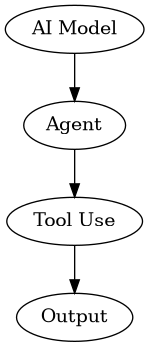
The architecture is divided into four core layers:
Access Layer: Handles user requests, supporting various protocols like REST API, WebSocket, and Message Queues. Responsible for request authentication, rate limiting, and protocol conversion.
Orchestration Layer: This is the core brain of the agent. It includes:
- Context Manager: Maintains dialogue history, tool invocation records, and intermediate states.
- Decision Engine: The LLM-based reasoning core that decides the next action.
- Workflow Executor: Manages the execution state of the DAG, handling parallelism and branching.
Tool Layer: Registers and manages all available tools. Each tool includes:
- Metadata: Name, description, and parameter schema.
- Executor: The actual business logic.
- Adapter: Handles input/output format conversion.
Storage Layer: Persists state, history, and knowledge bases. Supports multiple storage backends.
Key Component Design
Tool Registry
The tool registry needs to support dynamic registration and discovery. The design uses a plugin architecture:
type ToolRegistry struct {
    tools map[string]*ToolDefinition
    mu    sync.RWMutex
}

type ToolDefinition struct {
    Name        string                 `json:"name"`
    Description string                 `json:"description"`
    Parameters  map[string]interface{} `json:"parameters"`
    Handler     ToolHandler            `json:"-"`
    Timeout     time.Duration          `json:"timeout"`
    RetryPolicy *RetryPolicy           `json:"retry_policy,omitempty"`
}

type ToolHandler func(ctx context.Context, params map[string]interface{}) (*ToolResult, error)
Workflow Engine
The workflow engine is responsible for converting LLM decisions into an executable DAG. Core data structures:
type Workflow struct {
    ID        string         `json:"id"`
    Nodes     []*WorkflowNode `json:"nodes"`
    Edges     []*WorkflowEdge `json:"edges"`
    Status    WorkflowStatus `json:"status"`
    Context   *WorkflowContext `json:"context"`
}

type WorkflowNode struct {
    ID        string        `json:"id"`
    Type      NodeType      `json:"type"` // TOOL_CALL, CONDITION, PARALLEL, LOOP
    ToolName  string        `json:"tool_name,omitempty"`
    Params    map[string]interface{} `json:"params,omitempty"`
    Condition string        `json:"condition,omitempty"` // Condition expression
    Status    NodeStatus    `json:"status"`
    Result    *ToolResult   `json:"result,omitempty"`
    Error     string        `json:"error,omitempty"`
}

type WorkflowEdge struct {
    From    string `json:"from"`
    To      string `json:"to"`
    Type    EdgeType `json:"type"` // SEQUENTIAL, CONDITIONAL, PARALLEL
    Expression string `json:"expression,omitempty"` // Conditional branch expression
}
State Management
State management is a key challenge for agent systems. An event sourcing pattern is used:
type StateManager struct {
    store Store
}

type AgentState struct {
    SessionID   string                 `json:"session_id"`
    History     []Message              `json:"history"`
    Workflows   map[string]*Workflow   `json:"workflows"`
    Variables   map[string]interface{} `json:"variables"`
    Metadata    map[string]interface{} `json:"metadata"`
}

type StateEvent struct {
    Type      EventType     `json:"type"`
    Timestamp time.Time     `json:"timestamp"`
    Data      interface{}   `json:"data"`
}
Core Implementation: Building an AI Agent Engine in Golang
Project Structure
agent-engine/
├── cmd/
│   └── server/
│       └── main.go
├── internal/
│   ├── agent/
│   │   ├── engine.go
│   │   ├── session.go
│   │   └── workflow.go
│   ├── llm/
│   │   ├── client.go
│   │   ├── gpt.go
│   │   └── claude.go
│   ├── tools/
│   │   ├── registry.go
│   │   ├── calculator.go
│   │   ├── search.go
│   │   └── email.go
│   └── store/
│       ├── memory.go
│       └── redis.go
├── pkg/
│   ├── types.go
│   └── errors.go
├── config/
│   └── config.yaml
└── go.mod
Agent Engine Core Implementation
// internal/agent/engine.go
package agent
import (
"context"
"encoding/json"
"fmt"
"log"
"sync"
"time"
)
// AgentEngine is the core engine of the AI Agent
type AgentEngine struct {
llmClient LLMClient // LLM client, supports GPT-4o and Claude
toolRegistry *ToolRegistry // Tool registry
stateManager *StateManager // State manager
workflowGraph *WorkflowGraph // Workflow graph
config *Config // Configuration
mu sync.RWMutex
}
// NewAgentEngine creates a new Agent engine instance
func NewAgentEngine(config *Config) *AgentEngine {
return &AgentEngine{
llmClient: NewLLMClient(config.LLM),
toolRegistry: NewToolRegistry(),
stateManager: NewStateManager(config.Store),
workflowGraph: NewWorkflowGraph(),
config: config,
}
}
// Process processes a user request and returns an Agent response
func (e *AgentEngine) Process(ctx context.Context, sessionID string, userMessage string) (*AgentResponse, error) {
// 1. Get or create session state
state, err := e.stateManager.GetOrCreateSession(ctx, sessionID)
if err != nil {
return nil, fmt.Errorf("failed to get session state: %w", err)
}
// 2. Add user message to history
state.History = append(state.History, Message{
Role: "user",
Content: userMessage,
})
// 3. Build system prompt containing tool definitions
systemPrompt := e.buildSystemPrompt(state)
// 4. Main loop: execute at most maxIterations tool calls
maxIterations := e.config.MaxToolIterations
for i := 0; i < maxIterations; i++ {
// 4.1 Call LLM for response
response, err := e.llmClient.Chat(ctx, systemPrompt, state.History)
if err != nil {
return nil, fmt.Errorf("LLM call failed: %w", err)
}
// 4.2 Check if response contains a function call
if response.FunctionCall == nil {
// No function call, return final response
state.History = append(state.History, Message{
Role: "assistant",
Content: response.Content,
})
return &AgentResponse{
Content: response.Content,
SessionID: sessionID,
ToolCalls: state.getToolCallHistory(),
Completed: true,
}, nil
}
// 4.3 Handle function call
toolResult, err := e.executeFunctionCall(ctx, response.FunctionCall, state)
if err != nil {
// Error handling: allow Agent to attempt recovery
log.Printf("Tool call failed: %v", err)
state.History = append(state.History, Message{
Role: "assistant",
Content: fmt.Sprintf("Tool call error: %v, please try another method", err),
})
continue
}
// 4.4 Add tool call and result to history
state.History = append(state.History, Message{
Role: "assistant",
Content: response.Content,
FunctionCall: response.FunctionCall,
})
state.History = append(state.History, Message{
Role: "function",
Name: response.FunctionCall.Name,
Content: toolResult.Data,
})
// 4.5 Update workflow state
e.workflowGraph.UpdateNodeState(sessionID, response.FunctionCall.Name, toolResult)
}
// Reached maximum iterations, return current state
return &AgentResponse{
Content: "Reached maximum number of tool calls, task may be incomplete",
SessionID: sessionID,
ToolCalls: state.getToolCallHistory(),
Completed: false,
}, nil
}
// executeFunctionCall executes a function call and returns the result
func (e *AgentEngine) executeFunctionCall(ctx context.Context, fc *FunctionCall, state *AgentState) (*ToolResult, error) {
// 1. Find tool definition
toolDef, err := e.toolRegistry.Get(fc.Name)
if err != nil {
return nil, fmt.Errorf("tool not registered: %s", fc.Name)
}
// 2. Parse parameters
var params map[string]interface{}
if err := json.Unmarshal([]byte(fc.Arguments), ¶ms); err != nil {
return nil, fmt.Errorf("parameter parsing failed: %w", err)
}
// 3. Validate parameters
if err := e.validateParams(toolDef.Parameters, params); err != nil {
return nil, fmt.Errorf("parameter validation failed: %w", err)
}
// 4. Execute tool (with timeout and retry)
result, err := e.executeWithRetry(ctx, toolDef, params)
if err != nil {
return nil, err
}
// 5. Record tool call
state.addToolCall(&ToolCallRecord{
ToolName: fc.Name,
Parameters: params,
Result: result,
Timestamp: time.Now(),
})
return result, nil
}
// executeWithRetry executes a tool with a retry mechanism
func (e *AgentEngine) executeWithRetry(ctx context.Context, toolDef *ToolDefinition, params map[string]interface{}) (*ToolResult, error) {
var lastErr error
// Set timeout context
ctx, cancel := context.WithTimeout(ctx, toolDef.Timeout)
defer cancel()
// Get retry policy, default is 3 retries
retryCount := 3
if toolDef.RetryPolicy != nil {
retryCount = toolDef.RetryPolicy.MaxRetries
}
for i := 0; i < retryCount; i++ {
select {
case <-ctx.Done():
return nil, fmt.Errorf("tool execution timed out: %w", ctx.Err())
default:
result, err := toolDef.Handler(ctx, params)
if err == nil {
return result, nil
}
lastErr = err
log.Printf("Tool execution failed (attempt %d/%d): %v", i+1, retryCount, err)
// Exponential backoff
time.Sleep(time.Duration(1<<uint(i)) * 100 * time.Millisecond)
}
}
return nil, fmt.Errorf("tool execution failed (retried %d times): %w", retryCount, lastErr)
}
// buildSystemPrompt builds the system prompt containing tool definitions
func (e *AgentEngine) buildSystemPrompt(state *AgentState) string {
// Get definitions of all registered tools
tools := e.toolRegistry.List()
// Build tool description JSON
toolDescriptions := make([]map[string]interface{}, 0)
for _, tool := range tools {
toolDescriptions = append(toolDescriptions, map[string]interface{}{
"type": "function",
"function": map[string]interface{}{
"name": tool.Name,
"description": tool.Description,
"parameters": tool.Parameters,
},
})
}
// Serialize to JSON
toolsJSON, _ := json.Marshal(toolDescriptions)
return fmt.Sprintf(`You are an AI assistant capable of autonomously invoking tools. You can use the following tools to complete tasks:
%s
Based on user needs, independently decide whether to invoke a tool and the order of invocation.
After each tool call, you will receive the result. Continue reasoning based on the result.
If an error occurs, try another method or explain to the user.`, string(toolsJSON))
}
Workflow Orchestration Implementation
// internal/agent/workflow.go
package agent

import (
    "context"
    "fmt"
    "sync"
)

// WorkflowGraph manages the DAG structure of workflows
type WorkflowGraph struct {
    workflows map[string]*Workflow
    mu        sync.RWMutex
}

// NewWorkflowGraph creates a new workflow graph
func NewWorkflowGraph() *WorkflowGraph {
    return &WorkflowGraph{
        workflows: make(map[string]*Workflow),
    }
}

// CreateWorkflow creates a new workflow based on LLM decisions
func (wg *WorkflowGraph) CreateWorkflow(sessionID string, plan *WorkflowPlan) (*Workflow, error) {
    wg.mu.Lock()
    defer wg.mu.Unlock()

    workflow := &Workflow{
        ID:      generateID(),
        Status:  WorkflowPending,
        Context: NewWorkflowContext(),
    }

    // Convert plan to nodes and edges
    for _, step := range plan.Steps {
        node := &WorkflowNode{
            ID:       step.ID,
            Type:     step.NodeType,
            ToolName: step.ToolName,
            Params:   step.Params,
            Status:   NodePending,
        }
        workflow.Nodes = append(workflow.Nodes, node)
    }

    // Create edges based on dependencies
    for _, dep := range plan.Dependencies {
        edge := &WorkflowEdge{
            From: dep.From,
            To:   dep.To,
            Type: dep.EdgeType,
        }
        workflow.Edges = append(workflow.Edges, edge)
    }

    wg.workflows[sessionID] = workflow
    return workflow, nil
}

// ExecuteWorkflow executes the workflow and returns the final result
func (wg *WorkflowGraph) ExecuteWorkflow(ctx context.Context, sessionID string) (*WorkflowResult, error) {
    wg.mu.RLock()
    workflow, exists := wg.workflows[sessionID]
    wg.mu.RUnlock()

    if !exists {
        return nil, fmt.Errorf("workflow does not exist: %s", sessionID)
    }

    // Topological sort to determine execution order
    executionOrder, err := wg.topologicalSort(workflow)
    if err != nil {
        return nil, fmt.Errorf("topological sort failed: %w", err)
    }

    // Execute workflow
    for _, nodeID := range executionOrder {
        node := wg.findNode(workflow, nodeID)
        if node == nil {
            continue
        }

        // Check if dependencies are met
        if !wg.checkDependencies(workflow, nodeID) {
            return nil, fmt.Errorf("node dependencies not met: %s", nodeID)
        }

        // Execute node
        result, err := wg.executeNode(ctx, node)
        if err != nil {
            // Error recovery: mark node as failed, attempt subsequent nodes
            node.Status = NodeFailed
            node.Error = err.Error()

            // Check for an error recovery path
            recoveryNode := wg.findRecoveryPath(workflow, nodeID)
            if recoveryNode != nil {
                recoveryNode.Status = NodeRunning
                continue
            }

            return nil, fmt.Errorf("node execution failed: %w", err)
        }

        node.Status = NodeCompleted
        node.Result = result
        workflow.Context.Set(nodeID, result)
    }

    return &WorkflowResult{
        WorkflowID: workflow.ID,
        Status:     WorkflowCompleted,
        Context:    workflow.Context,
    }, nil
}

// topologicalSort performs topological sorting on the workflow
func (wg *WorkflowGraph) topologicalSort(workflow *Workflow) ([]string, error) {
    // Kahn's algorithm implementation
    inDegree := make(map[string]int)
    graph := make(map[string][]string)

    // Initialize in-degrees
    for _, node := range workflow.Nodes {
        inDegree[node.ID] = 0
    }

    // Build adjacency list and calculate in-degrees
    for _, edge := range workflow.Edges {
        graph[edge.From] = append(graph[edge.From], edge.To)
        inDegree[edge.To]++
    }

    // Queue for nodes with in-degree 0
    var queue []string
    for nodeID, degree := range inDegree {
        if degree == 0 {
            queue = append(queue, nodeID)
        }
    }

    var result []string
    for len(queue) > 0 {
        nodeID := queue[0]
        queue = queue[1:]
        result = append(result, nodeID)

        for _, neighbor := range graph[nodeID] {
            inDegree[neighbor]--
            if inDegree[neighbor] == 0 {
                queue = append(queue, neighbor)
            }
        }
    }

    if len(result) != len(workflow.Nodes) {
        return nil, fmt.Errorf("workflow contains a cyclic dependency")
    }

    return result, nil
}

// executeNode executes a single workflow node
func (wg *WorkflowGraph) executeNode(ctx context.Context, node *WorkflowNode) (*ToolResult, error) {
    switch node.Type {
    case NodeTypeToolCall:
        // Tool call node
        return wg.executeToolNode(ctx, node)
    case NodeTypeCondition:
        // Condition node
        return wg.executeConditionNode(ctx, node)
    case NodeTypeParallel:
        // Parallel execution node
        return wg.executeParallelNode(ctx, node)
    default:
        return nil, fmt.Errorf("unknown node type: %v", node.Type)
    }
}

// executeToolNode executes a tool node
func (wg *WorkflowGraph) executeToolNode(ctx context.Context, node *WorkflowNode) (*ToolResult, error) {
    // Get tool from registry and execute
    toolDef := GetToolRegistry().Get(node.ToolName)
    if toolDef == nil {
        return nil, fmt.Errorf("tool not found: %s", node.ToolName)
    }

    return toolDef.Handler(ctx, node.Params)
}

// executeConditionNode executes a condition node
func (wg *WorkflowGraph) executeConditionNode(ctx context.Context, node *WorkflowNode) (*ToolResult, error) {
    // Parse condition expression and evaluate result
    // Simplified implementation; an expression engine can be used in practice
    conditionResult := evaluateCondition(node.Condition, node.Params)

    return &ToolResult{
        Data: fmt.Sprintf(`{"condition_result": %v}`, conditionResult),
    }, nil
}

// executeParallelNode executes multiple child nodes in parallel
func (wg *WorkflowGraph) executeParallelNode(ctx context.Context, node *WorkflowNode) (*ToolResult, error) {
    var wg sync.WaitGroup
    results := make([]*ToolResult, len(node.Children))
    errors := make([]error, len(node.Children))

    for i, child := range node.Children {
        wg.Add(1)
        go func(index int, childNode *WorkflowNode) {
            defer wg.Done()
            result, err := wg.executeNode(ctx, childNode)
            results[index] = result
            errors[index] = err
        }(i, child)
    }

    wg.Wait()

    // Check for errors
    for _, err := range errors {
        if err != nil {
            return nil, fmt.Errorf("error during parallel execution: %w", err)
        }
    }

    // Combine results
    combinedData := "["
    for i, result := range results {
        if i > 0 {
            combinedData += ","
        }
        combinedData += result.Data
    }
    combinedData += "]"

    return &ToolResult{
        Data: combinedData,
    }, nil
}
Tool Registration and Invocation Implementation
// internal/tools/registry.go
package tools

import (
    "context"
    "encoding/json"
    "fmt"
    "sync"
)

// ToolRegistry is the tool registry that manages all available tools
type ToolRegistry struct {
    tools map[string]*ToolDefinition
    mu    sync.RWMutex
}

// NewToolRegistry creates a new tool registry
func NewToolRegistry() *ToolRegistry {
    return &ToolRegistry{
        tools: make(map[string]*ToolDefinition),
    }
}

// Register registers a new tool
func (r *ToolRegistry) Register(tool *ToolDefinition) error {
    r.mu.Lock()
    defer r.mu.Unlock()

    if _, exists := r.tools[tool.Name]; exists {
        return fmt.Errorf("tool already exists: %s", tool.Name)
    }

    // Validate tool definition
    if err := r.validateTool(tool); err != nil {
        return fmt.Errorf("tool validation failed: %w", err)
    }

    r.tools[tool.Name] = tool
    return nil
}

// Get returns a tool definition
func (r *ToolRegistry) Get(name string) *ToolDefinition {
    r.mu.RLock()
    defer r.mu.RUnlock()

    return r.tools[name]
}

// List lists all registered tools
func (r *ToolRegistry) List() []*ToolDefinition {
    r.mu.RLock()
    defer r.mu.RUnlock()

    result := make([]*ToolDefinition, 0, len(r.tools))
    for _, tool := range r.tools {
        result = append(result, tool)
    }
    return result
}

// Unregister unregisters a tool
func (r *ToolRegistry) Unregister(name string) error {
    r.mu.Lock()
    defer r.mu.Unlock()

    if _, exists := r.tools[name]; !exists {
        return fmt.Errorf("tool does not exist: %s", name)
    }

    delete(r.tools, name)
    return nil
}

// validateTool validates the legality of a tool definition
func (r *ToolRegistry) validateTool(tool *ToolDefinition) error {
    if tool.Name == "" {
        return fmt.Errorf("tool name cannot be empty")
    }
    if tool.Description == "" {
        return fmt.Errorf("tool description cannot be empty")
    }
    if tool.Handler == nil {
        return fmt.Errorf("tool handler cannot be nil")
    }
    if tool.Parameters == nil {
        return fmt.Errorf("tool parameters cannot be nil")
    }
    return nil
}

// Example: Calculator tool
func initCalculatorTool() *ToolDefinition {
    return &ToolDefinition{
        Name:        "calculator",
        Description: "Performs mathematical calculations, supports addition, subtraction, multiplication, division, and complex expressions",
        Parameters: map[string]interface{}{
            "type": "object",
            "properties": map[string]interface{}{
                "expression": map[string]interface{}{
                    "type":        "string",
                    "description": "Mathematical expression, e.g., (3 + 5) * 2",
                },
            },
            "required": []string{"expression"},
        },
        Handler: func(ctx context.Context, params map[string]interface{}) (*ToolResult, error) {
            expression, ok := params["expression"].(string)
            if !ok {
                return nil, fmt.Errorf("missing expression parameter")
            }

            // Use a safe expression evaluator
            result, err := safeEval(expression)
            if err != nil {
                return nil, fmt.Errorf("calculation error: %w", err)
            }

            return &ToolResult{
                Data: fmt.Sprintf(`{"result": %f}`, result),
            }, nil
        },
        Timeout: 5 * time.Second,
        RetryPolicy: &RetryPolicy{
            MaxRetries: 2,
            Backoff:    time.Second,
        },
    }
}

// Example: Search tool (simulated)
func initSearchTool() *ToolDefinition {
    return &ToolDefinition{
        Name:        "web_search",
        Description: "Searches the internet for the latest information and returns relevant results",
        Parameters: map[string]interface{}{
            "type": "object",
            "properties": map[string]interface{}{
                "query": map[string]interface{}{
                    "type":        "string",
                    "description": "Search keyword",
                },
                "max_results": map[string]interface{}{
                    "type":        "integer",
                    "description": "Number of results to return, default is 5",
                    "default":     5,
                },
            },
            "required": []string{"query"},
        },
        Handler: func(ctx context.Context, params map[string]interface{}) (*ToolResult, error) {
            query, _ := params["query"].(string)
            maxResults, _ := params["max_results"].(int)
            if maxResults <= 0 {
                maxResults = 5
            }

            // Simulate search API call
            results := simulateSearch(query, maxResults)

            jsonData, _ := json.Marshal(results)
            return &ToolResult{
                Data: string(jsonData),
            }, nil
        },
        Timeout: 10 * time.Second,
    }
}
Performance Optimization: Making the Agent Faster and More Stable
LLM Call Optimization
Caching Strategy: For identical tool call requests, if parameters are the same and the result is cacheable, return the cached result directly. This is especially useful for information query tools.
type CacheManager struct {
    cache *lru.Cache
    ttl   time.Duration
}

func (cm *CacheManager) GetOrCompute(key string, ttl time.Duration, compute func() (*ToolResult, error)) (*ToolResult, error) {
    if cached, ok := cm.cache.Get(key); ok {
        return cached.(*ToolResult), nil
    }

    result, err := compute()
    if err != nil {
        return nil, err
    }

    cm.cache.AddWithTTL(key, result, ttl)
    return result, nil
}
Batch Inference: When multiple tool calls have no dependencies, LLM inference can be performed in parallel. However, attention must be paid to token limits and context consistency.
Streaming Response: For long-running tool calls, use streaming to return intermediate results, improving user experience.
Tool Execution Optimization
Connection Pool Reuse: For HTTP-based tools, reuse connection pools to reduce handshake overhead.
Resource Limits: Set maximum concurrency for each tool to prevent resource exhaustion.
Preloading: Based on historical call patterns, preload definitions for frequently used tools.
Workflow Optimization
Parallel Execution: Use goroutines to execute independent nodes in parallel, significantly reducing total execution time.
Incremental Computation: For repeatedly executed workflows, only compute the changed parts.
State Compression: Periodically compress historical states, removing unnecessary intermediate results to reduce memory usage.
Production Practices: From Prototype to High-Availability System
Deployment Architecture
Kubernetes deployment is recommended for production environments. Key configurations:
- Horizontal Scaling: The Agent engine is stateless and can auto-scale based on load.
- Graceful Degradation: Fall back to a rule engine when the LLM service is unavailable.
- Canary Releases: Validate new tools in a canary environment before full rollout.
Monitoring and Alerting
Core Metrics:
- Tool call success rate
- Average response time
- Workflow completion rate
- LLM token consumption
Log Tracing: Use OpenTelemetry for distributed tracing, attaching a trace ID to each tool call.
Security and Governance
Access Control: Each tool has an independent Access Control List (ACL).
Audit Logging: Record all tool call inputs and outputs to meet compliance requirements.
Rate Limiting and Circuit Breaking: Rate limit abnormal calls to protect downstream services.
Common Pitfalls and Solutions
Problem 1: LLM generates invalid parameters Solution: Validate parameters before tool execution and provide clear error messages for the LLM to correct.
Problem 2: Infinite loop of calls Solution: Set a maximum number of iterations and implement loop detection logic.
Problem 3: Context window overflow Solution: Implement intelligent context compression, retaining only key information.
Problem 4: Tool call timeout Solution: Set a timeout for each tool and implement a retry mechanism.
Summary and Outlook
The autonomous tool invocation and workflow orchestration of AI agents are reshaping how we interact with AI. From single-turn conversations to multi-step task execution, from single tools to complex orchestration, AI is evolving from “answering questions” to “completing tasks.”
This article, starting from technical principles, has detailed the core mechanisms for building an AI agent system and provided a complete implementation in Golang. Through key technologies like dynamic tool selection, DAG workflow orchestration, error recovery, and state management, we can build AI agents that can think and manage complex tasks like humans.
In the future, as model capabilities improve, AI agents will be able to handle even more complex tasks: cross-system orchestration, multi-modal interaction, and long-term goal planning. The focus for developers will be on maintaining flexibility while ensuring system controllability and security.
Technology is ever-evolving, but the core principle remains the same: make AI a reliable assistant, not an unpredictable black box.